
Rabies is a serious viral disease that affects the nervous system of mammals, including dogs, cats, wildlife and people. Although rabies is uncommon in domestic animals in Alberta, potential exposure can still occur. Vaccinating pets is an important preventive step for animal and public health.
What is rabies and how can dogs be exposed?
Rabies virus is transmitted through the saliva of an infected animal, usually when saliva enters the body through a bite or broken skin. Direct contact with a bat is also treated seriously. Alberta identifies bats as an important source of potential rabies exposure; a bat may enter a home, garage, shed or backyard unexpectedly.
Do not approach or handle a bat or other wild animal. You cannot reliably tell whether a bat has rabies simply by looking at it. If your dog has had direct contact with a bat or has been bitten by an animal behaving abnormally, contact your veterinarian promptly.
Why do puppies need a series of vaccinations?
Puppies receive temporary antibodies from their mother, mainly through the first milk (colostrum). These maternal antibodies gradually decline, but the timing varies from one puppy to another. While they are present, they can sometimes interfere with a puppy’s response to a vaccine. A series of doses helps provide opportunities for protection as maternal antibodies decrease.
This is why a veterinarian may recommend repeat vaccinations at intervals during the first months of life, with a final puppy core dose at 16 weeks of age or later. The precise plan should follow the vaccine product instructions and the veterinarian’s assessment.
What does a typical puppy vaccination timeline look like?
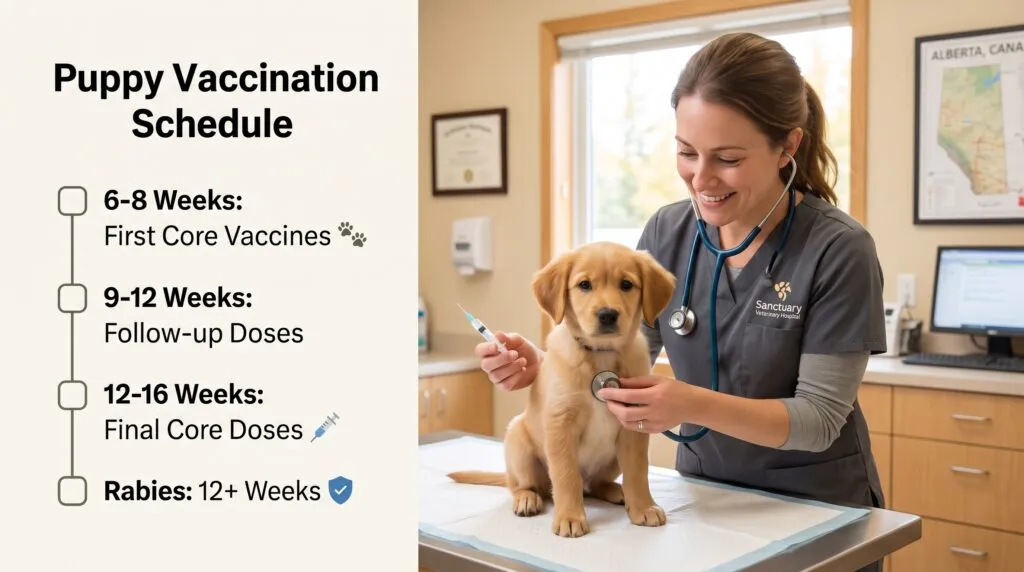
A commonly used approach for core puppy vaccines begins at around 6–8 weeks of age, followed by repeat doses every 3–4 weeks until at least 16 weeks. In some higher-risk environments, a veterinarian may recommend continuing the series for longer.
- Around 6–8 weeks: the first core vaccination may be given, depending on the puppy’s age and health.
- Around 9–12 weeks: a follow-up dose may be scheduled, commonly 3–4 weeks after the first.
- Around 12–16 weeks: further doses may be needed so the puppy receives an appropriate final core dose at 16 weeks or later.
- After the initial series: a further booster and longer-term revaccination plan will be advised by the veterinarian.
- Rabies vaccination: timing is determined by the vaccine label, the puppy’s age and veterinary advice; it is often considered from approximately 12 weeks onward.
This is an educational overview, not an individual vaccination prescription. If your puppy has already received vaccines from a breeder, shelter or previous clinic, bring the records to the appointment so the veterinary team can decide what is still required.
Which diseases do core puppy vaccines help prevent?
Canine distemper
Distemper is a contagious viral disease that can affect several body systems, including the respiratory, digestive and nervous systems. It can be severe, particularly in young or unprotected dogs.
Canine parvovirus
Parvovirus is highly contagious and can cause serious gastrointestinal illness, including vomiting and diarrhoea. Young puppies are especially vulnerable. Prompt veterinary attention is important if a puppy develops concerning symptoms.
Canine adenovirus
Vaccination against canine adenovirus helps protect against infectious canine hepatitis and related disease. These core antigens are commonly included in combination vaccines.
Are additional vaccines needed?
Not every dog has the same lifestyle or exposure risks. Depending on where a puppy lives, how often they mix with other dogs, travel, boarding or attend group activities, the veterinarian may discuss additional vaccines such as Bordetella or leptospirosis. These are not automatically required for every puppy; the decision should be individualised.
Can puppies go outside before finishing their vaccines?
Puppies benefit from safe, positive socialisation while they are young, but they may remain vulnerable to infection during the vaccination series. Ask your veterinarian which local environments are appropriate and which should be avoided until protection has developed. Avoid high-traffic areas used by unknown dogs if your veterinary team advises that the infection risk is high.
What should you bring to your puppy’s first vaccination visit?
- Any vaccination or deworming records from the breeder, shelter or previous owner.
- Your puppy’s approximate date of birth and any known medical history.
- Details about the puppy’s routine, outdoor access, travel, boarding and contact with other dogs.
- A list of questions about vaccine timing, parasite prevention, nutrition and safe socialisation.
Why are follow-up appointments important?
A vaccination plan works best when the recommended series is completed. Missing or delaying a dose may mean the veterinarian needs to reassess the schedule. Keep a record of each vaccine and the next recommended date. If you are unsure whether a dose is overdue, contact the clinic rather than restarting or changing the schedule yourself.
Give your puppy a healthy start
The first months of a puppy’s life are an important time to establish preventive care. A veterinary team can review your puppy’s health, vaccination history and lifestyle, then recommend a plan suited to their needs.
GET IN TOUCH
Schedule a Visit
The first months of a puppy’s life are an important time to establish preventive care. A veterinary team can review your puppy’s health, vaccination history and lifestyle, then recommend a plan suited to their needs.