
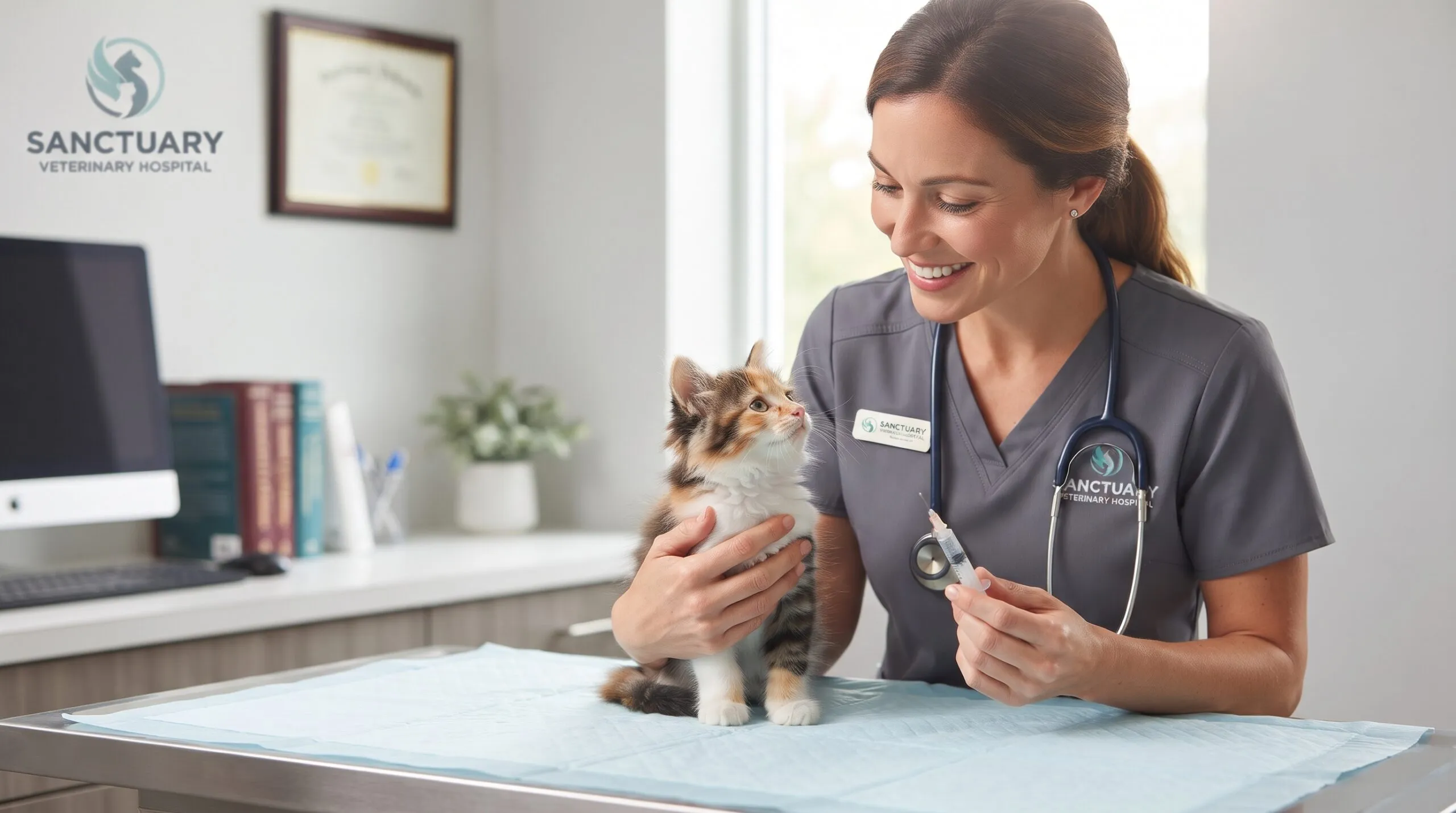
A new kitten brings energy, curiosity and plenty of personality into a home. As you prepare their food, litter area and safe spaces, it is also worth planning their first veterinary visit. Vaccinations help protect kittens against several contagious diseases and are an important part of preventive healthcare.
Why do kittens need a vaccination programme?
Kittens are still developing their immune systems. They may receive temporary antibodies from their mother, but these decline over time and can affect how well early vaccine doses work. For this reason, core kitten vaccines are usually given as a series rather than a single injection.
The exact programme depends on the kitten’s age, health, vaccination history, environment and risk of exposure. A kitten adopted from a shelter, a kitten living with other cats and a kitten kept strictly indoors may have different risk considerations.
When should kittens receive their first vaccinations?
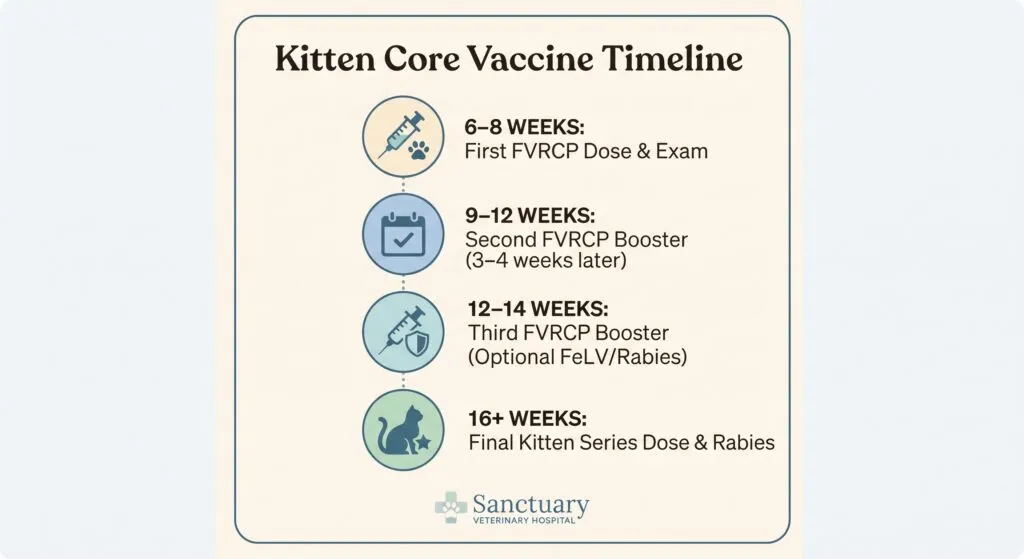
Many kitten vaccination programmes begin at approximately 6–8 weeks of age, with repeat doses at intervals recommended by the veterinarian. The series is generally continued until the kitten is at least 16 weeks old, depending on the vaccine and clinical circumstances.
- Around 6–8 weeks: a veterinarian may begin the core vaccination series.
- Following visits: repeat doses are commonly scheduled every 3–4 weeks during the kitten period.
- At 16 weeks or later: the veterinarian checks that the kitten has received the appropriate final dose in the primary series.
- After the kitten series: booster timing is based on the vaccine product, current guidelines and the kitten’s individual risk.
If your kitten is older when you adopt them, do not assume it is too late to start. Bring any existing records to the clinic so the veterinarian can establish an appropriate catch-up plan.
What is the FVRCP vaccine?
FVRCP is a combination vaccine that protects cats against three important infectious diseases. It is commonly considered a core vaccine for cats.
Feline viral rhinotracheitis
This upper respiratory disease is associated with feline herpesvirus. Signs can include sneezing, nasal discharge and eye inflammation. Some cats may continue to carry the virus after infection.
Feline calicivirus
Calicivirus can cause respiratory illness and painful oral ulcers. The severity of illness can vary, and infection may be particularly concerning in young or vulnerable cats.
Feline panleukopenia
Panleukopenia is a serious viral disease that can affect the digestive system and immune cells. Young kittens are particularly vulnerable, making appropriate core vaccination important.
Do kittens need rabies or feline leukaemia vaccination?
Rabies vaccination may be recommended depending on local requirements, the kitten’s circumstances and the vaccine product. Your veterinarian can advise on appropriate timing.
Feline leukaemia virus (FeLV) vaccination may also be considered, particularly for kittens and cats with potential exposure to other cats. The decision should take into account lifestyle, household composition and risk. Your veterinarian may recommend testing and discuss the benefits and limitations of vaccination.
Do indoor cats need vaccinations?
Indoor living can reduce some exposure risks, but it does not remove every risk. Cats may escape outdoors, visit a veterinary clinic, live with newly introduced animals or encounter infectious material brought into the home. Your veterinarian can help decide which vaccines are appropriate for your cat’s lifestyle.
What happens during a kitten vaccination appointment?
A veterinary visit should include more than an injection. The team may review the kitten’s history, assess general health, discuss nutrition and parasite prevention, and explain the next vaccination dates. This is also a good time to ask about litter habits, safe handling, behaviour and the transition into a new home
How can you prepare?
- Bring any vaccination, deworming or adoption records.
- Use a secure carrier and place familiar bedding inside if it helps your kitten feel comfortable.
- Tell the veterinary team about appetite, energy, sneezing, diarrhoea or other concerns.
- Ask for a written vaccination record and the next recommended appointment date.
A healthy start for your kitten
Preventive care during kittenhood helps establish a foundation for long-term health. A veterinarian can tailor recommendations to your cat’s age, medical history and lifestyle rather than relying on a one-size-fits-all schedule.
GET IN TOUCH
Schedule a Visit
Contact Sanctuary Veterinary Hospital in Calgary to discuss your kitten’s vaccination needs and arrange a veterinary visit