Rabies is a serious viral disease that affects the nervous system of mammals, including dogs, cats, wildlife and people. Although rabies is uncommon in domestic animals in Alberta, potential exposure can still occur. Vaccinating pets is an important preventive step for animal and public health.
What is rabies and how can dogs be exposed?
Rabies virus is transmitted through the saliva of an infected animal, usually when saliva enters the body through a bite or broken skin. Direct contact with a bat is also treated seriously. Alberta identifies bats as an important source of potential rabies exposure; a bat may enter a home, garage, shed or backyard unexpectedly.
Do not approach or handle a bat or other wild animal. You cannot reliably tell whether a bat has rabies simply by looking at it. If your dog has had direct contact with a bat or has been bitten by an animal behaving abnormally, contact your veterinarian promptly.
When should a dog receive its first rabies vaccination?
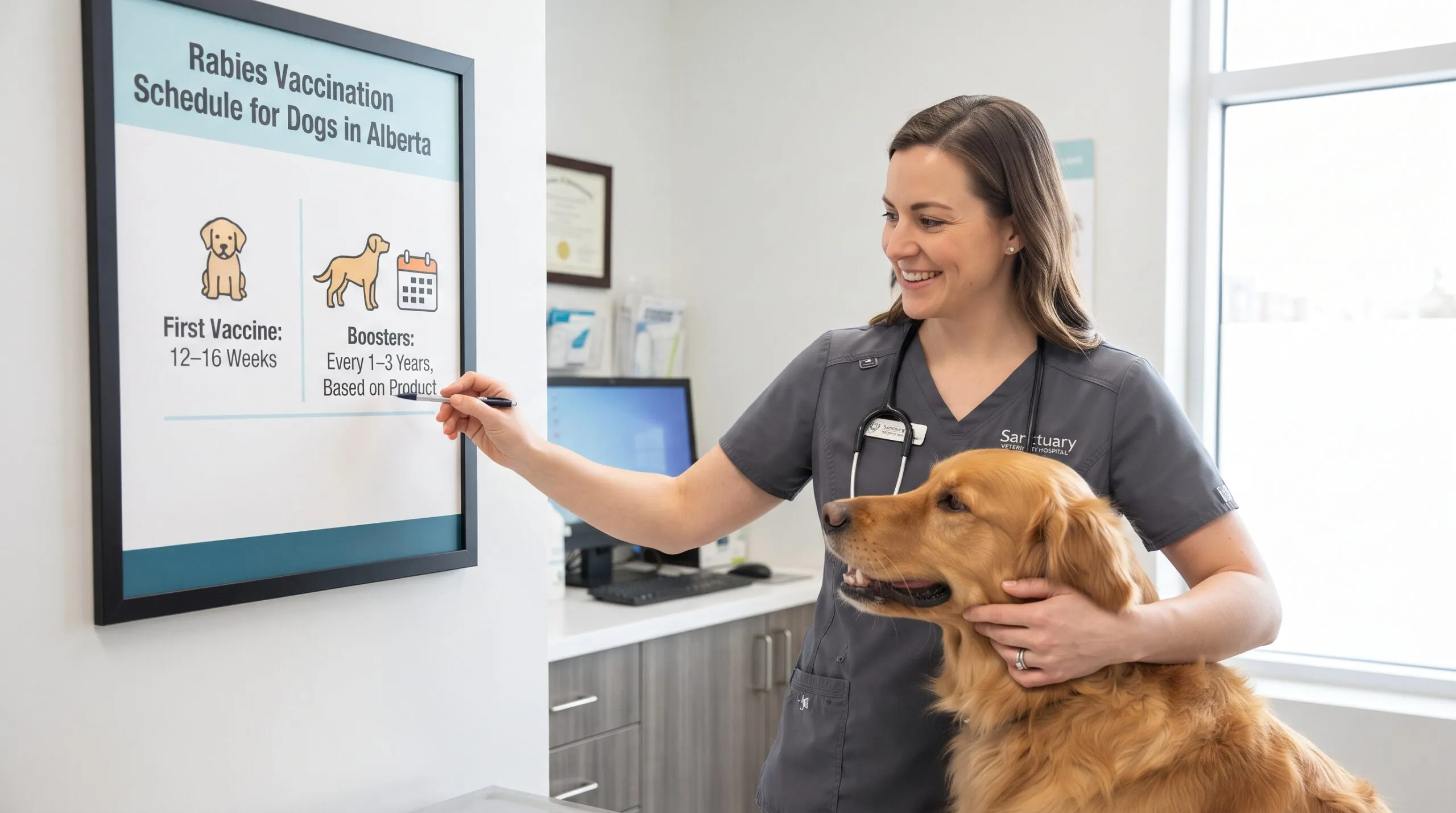
The timing of a first rabies vaccine depends on the product’s approved label, the dog’s age and health, and veterinary advice. It is commonly included in a puppy’s early vaccination programme, often from approximately 12 weeks of age. Your veterinarian will confirm the appropriate timing and document the dose.
How often do dogs need rabies boosters?
There is no single booster interval that applies to every dog and every vaccine. Rabies vaccines may have different approved durations of immunity, and the next due date depends on the product used and the dog’s vaccination history. Some products are labelled for one-year revaccination and others for longer intervals.
Check your dog’s vaccination certificate for the product and next due date. If you have adopted your dog and do not have reliable records, ask the veterinary clinic to help establish the vaccination history and a suitable plan. Do not assume a vaccine is current based only on a previous owner’s verbal recollection.
Why vaccinate if rabies is uncommon in Alberta?
Low prevalence does not mean zero risk. Alberta’s guidance explains that bats can be encountered in unexpected places and that vaccination is the safest and most effective way to protect pets. Vaccination also helps reduce the risk to people who may come into contact with an infected animal.
Keeping rabies vaccination records up to date can also make the response to a possible exposure more straightforward. The public health veterinarian may consider the animal’s vaccination status when determining the appropriate management.
What should you do if your dog may have been exposed?
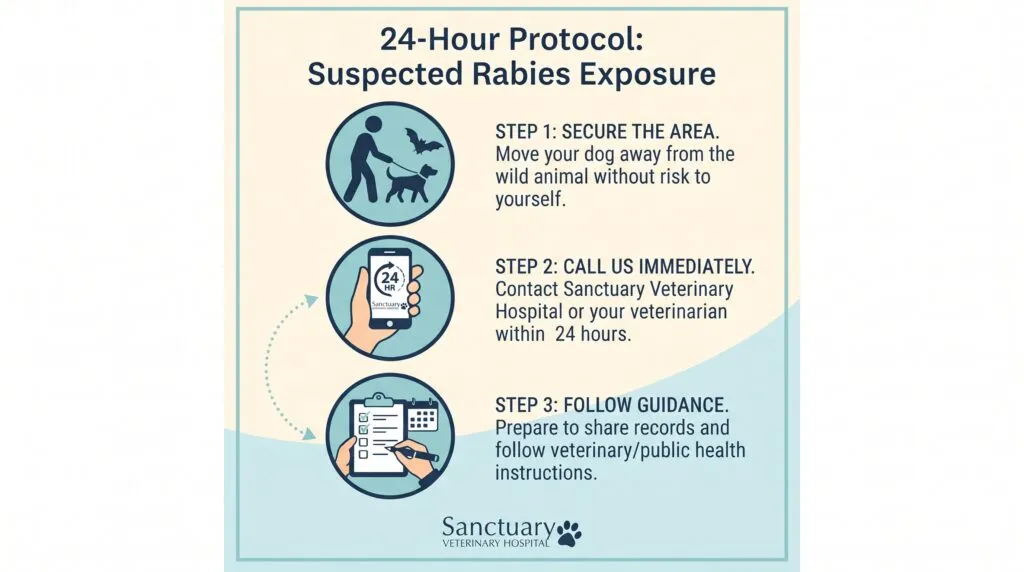
Treat a possible exposure as time-sensitive. Alberta advises owners to call their veterinarian within 24 hours if they suspect a pet or other domestic animal has been exposed to rabies. Do not wait for symptoms.
- Move your dog away from the other animal, without putting yourself at risk.
- Avoid touching wildlife, including bats, with bare hands.
- Contact your veterinarian promptly and explain what happened, when it happened and which animal was involved.
- Share your dog’s rabies vaccination records if available.
- Follow veterinary and public health instructions about examination, vaccination, reporting, observation or quarantine.
Alberta guidance states that exposed domestic animals should receive rabies vaccination as soon as possible, even if previously vaccinated, and every effort should be made to give it within 96 hours. The exact management is determined by the exposure circumstances and the Alberta Rabies Program.
Does a vaccinated dog still need attention after exposure?
Yes. Vaccination substantially reduces risk, but a suspected exposure still needs prompt veterinary advice. Alberta’s post-exposure guidance includes additional assessment and may call for a booster even when an animal has previously been vaccinated. Do not make this decision yourself or wait to see whether your dog becomes unwell.
Keep your dog’s records up to date
Store vaccination certificates where you can find them, note the next booster date and bring the records to routine veterinary visits. If your dog travels, boards or attends group activities, ask whether additional documentation or preventive measures are needed.
Protect your pet and your family
Rabies prevention is a shared responsibility. Avoid contact with wildlife, keep your pet’s vaccinations current and seek advice quickly after a possible exposure.
GET IN TOUCH
Schedule a Visit
Contact Sanctuary Veterinary Hospital in Calgary to review your dog’s vaccination history and discuss a suitable preventive care plan