
Table of Contents
Exotic pets are becoming increasingly popular in Calgary. From reptiles and birds to small mammals, these unique companions require specialized care that goes beyond standard dog and cat medicine.
At Sanctuary Veterinary Hospital, we understand that exotic pets have very specific health, dietary, and environmental needs. If you own (or are thinking of owning) an exotic pet, here’s what you need to know.
What Is Considered an Exotic Pet?
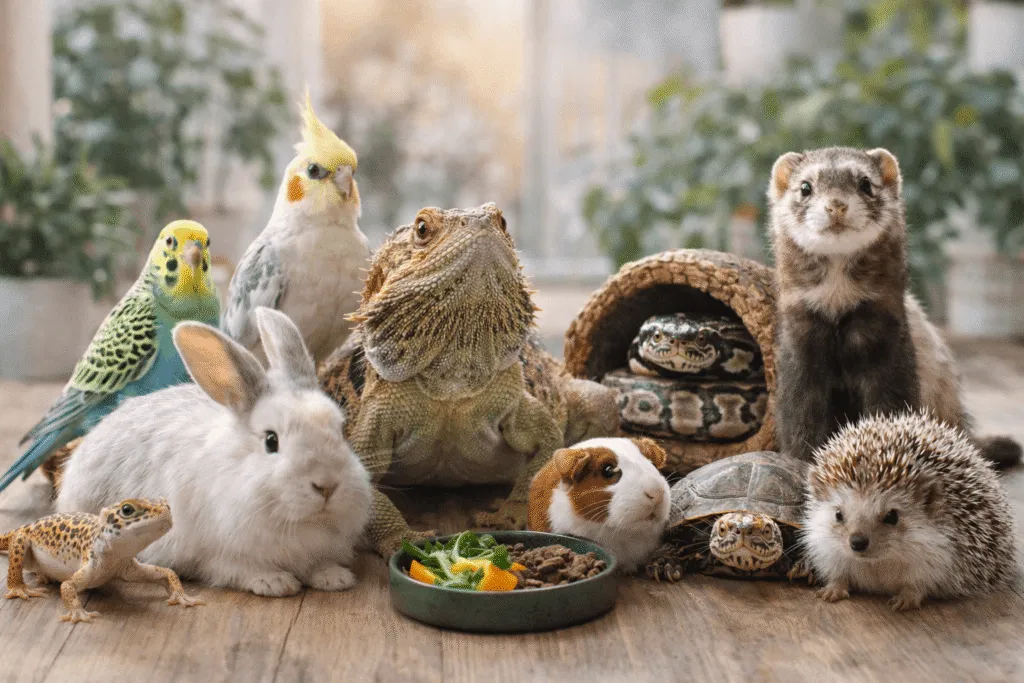
“Exotic pet” generally refers to animals that are not traditional household pets. In Calgary, this may include:
Reptiles (bearded dragons, geckos, snakes, turtles)
Birds (parrots, cockatiels, budgies)
Small mammals (rabbits, ferrets, guinea pigs, hedgehogs)
Amphibians and other specialty species
Each species has unique care requirements — and improper housing or diet can quickly lead to health issues.
Common Exotic Pets in Calgary & Key Care Requirements
| Exotic Pet | Lifespan (Avg.) | Ideal Temperature | Diet Type | Special Care Needs | Vet Check Frequency |
|---|---|---|---|---|---|
| Bearded Dragon | 8–12 years | 35–40°C basking | Insects + Vegetables | UVB lighting, calcium supplements | Every 6–12 months |
| Leopard Gecko | 10–20 years | 28–32°C | Live insects | Heat mat, low humidity enclosure | Annually |
| Ball Python | 20–30 years | 26–32°C | Frozen/thawed rodents | Secure enclosure, humidity control | Annually |
| Red-Eared Slider Turtle | 20–40 years | 24–29°C water | Pellets + Greens + Protein | UVB light, clean aquatic filtration | Annually |
| Budgie (Parakeet) | 7–15 years | 18–24°C | Seeds + Pellets + Veggies | Social interaction, cage enrichment | Annually |
| Cockatiel | 15–25 years | 18–24°C | Pellets + Seeds + Fresh food | Mental stimulation, wing care | Annually |
| Rabbit | 8–12 years | 15–21°C | Hay-based diet | Dental monitoring, exercise space | 1–2 times per year |
| Guinea Pig | 5–8 years | 18–24°C | Hay + Vitamin C-rich veggies | Vitamin C supplementation | Annually |
| Ferret | 6–10 years | 15–24°C | High-protein diet | Vaccinations, adrenal monitoring | Annually |
| Hedgehog | 4–7 years | 22–27°C | Insect-based diet | Warm enclosure, specialized bedding | Annually |
Habitat & Temperature Control Matters
Calgary’s cold winters can create challenges for exotic pet owners. Many reptiles and tropical birds require consistent warmth and humidity levels year-round.
Key considerations:
Proper heat lamps and UVB lighting
Thermometer and humidity monitoring
Safe enclosure setup
Avoiding cold drafts near windows
Even a short temperature drop can stress reptiles and lead to illness.
Specialized Nutrition Is Critical
Unlike dogs and cats, exotic pets often need highly specific diets:
Reptiles may require live insects or calcium supplementation
Birds need balanced seed, pellet, and fresh produce combinations
Rabbits and guinea pigs need high-fiber hay-based diets
Nutritional deficiencies are one of the most common reasons exotic pets become sick.
| Exotic Pet | Good Foods | Foods to Avoid | Notes / Tips |
|---|---|---|---|
| Bearded Dragon | Crickets, mealworms, leafy greens, squash, bell peppers | Iceberg lettuce, avocado, rhubarb, processed human food | Provide calcium & vitamin D3 supplements; dust insects regularly |
| Leopard Gecko | Crickets, mealworms, dubia roaches | Lettuce, fruit, citrus, sticky or sugary foods | Feed live insects only; avoid overfeeding fatty insects |
| Ball Python | Frozen/thawed mice or rats (appropriate size) | Live prey without supervision, chocolate, citrus | Never feed wild-caught rodents; always thaw frozen prey properly |
| Red-Eared Slider Turtle | Pellets, leafy greens, aquatic plants, occasional protein | Iceberg lettuce, rhubarb, processed human food | Provide UVB lighting; avoid overfeeding protein for young turtles |
| Budgie / Parakeet | Pellets, fresh veggies, fruits (small amounts), millet sprays | Avocado, chocolate, caffeine, alcohol | Rotate diet for balanced nutrition; avoid fruit seeds (apple, cherry) |
| Cockatiel | Pellets, fresh vegetables, fruits, sprouts | Avocado, chocolate, caffeine, salty or fried foods | Provide cuttlebone for calcium; avoid high-fat foods |
| Rabbit | Timothy hay, leafy greens, small portion of pellets | Iceberg lettuce, beans, chocolate, sugary snacks | Ensure constant access to hay; avoid sudden diet changes |
| Guinea Pig | Timothy hay, fresh vegetables, Vitamin C-rich foods | Iceberg lettuce, onions, garlic, chocolate | Require daily Vitamin C; avoid iceberg lettuce for low nutrients |
| Ferret | High-protein, meat-based diet, ferret pellets | Sugar, fruit, grains, dairy, processed human foods | Strict carnivores; never feed carbs or sugary treats |
| Hedgehog | Insects, high-quality hedgehog or cat food, fruits (small) | Dairy, citrus, sugary snacks, grapes/raisins | Provide high-protein, low-fat diet; monitor weight |
Preventive Veterinary Care for Exotic Pets
Many exotic pet owners wait until something is seriously wrong before visiting a vet. However, preventive care is just as important for reptiles, birds, and small mammals as it is for dogs and cats.
Routine exams can help detect:
Respiratory infections
Parasites
Metabolic bone disease
Beak or dental overgrowth
Weight and nutritional imbalances
Early detection can save your pet’s life.
⚠️ Signs Your Exotic Pet Needs a Vet
Exotic animals often hide symptoms until illness becomes advanced. Watch for:
Lethargy
Loss of appetite
Abnormal droppings
Swelling or discharge
Changes in behavior
If you notice any of these signs, seek veterinary attention promptly.
Finding the Right Exotic Vet in Calgary
Not all veterinary clinics are equipped or experienced in treating exotic species. It’s important to choose a veterinary hospital that understands species-specific medicine and proper handling techniques.
At Sanctuary Veterinary Hospital in NW Calgary, our compassionate team is committed to providing attentive, knowledgeable care tailored to your pet’s unique needs.